
Caring for lifer and health Making contributions to the health of human beings


Release time:2026-06-04 11:30:14 Reading:
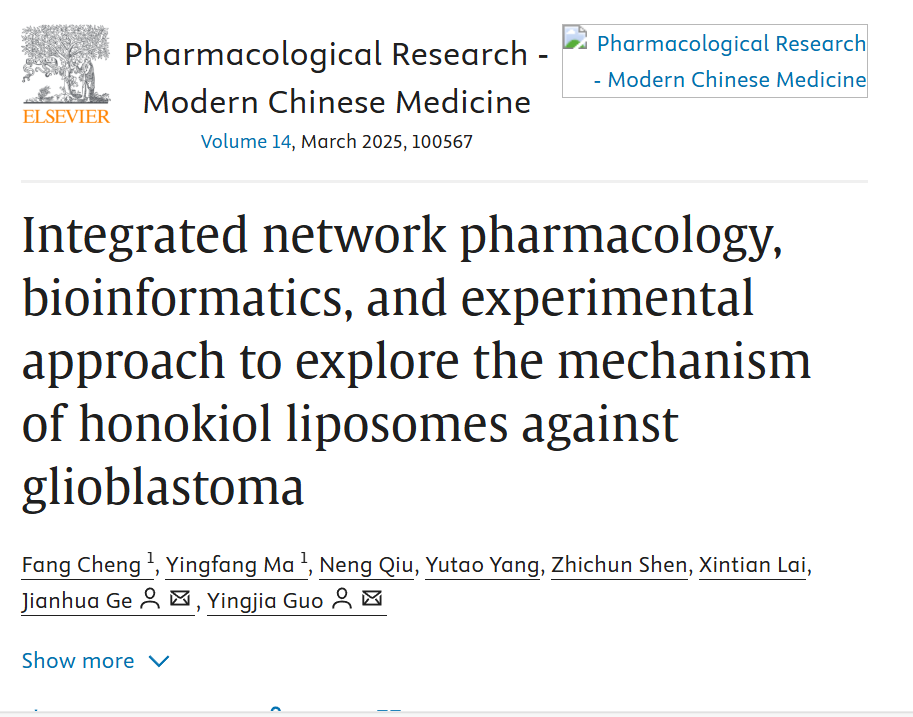
Beijing Jinrui Jiyie Medical Technology Co., Ltd. recently published a significant research paper titled "Integrated Network Pharmacology, Bioinformatics, and Experimental Approach to Explore the Mechanism of Honokiol Liposomes Against Glioblastoma" in the internationally renowned journal Pharmacological Research - Modern Chinese Medicine (Volume 14, March 2025) on the ScienceDirect platform. This study was jointly completed by the pharmacology, clinical, and formulation R&D teams at Jinrui Jiyie, providing important theoretical support and practical evidence for the clinical application of honokiol liposomes in the field of glioblastoma (Glioblastoma multiforme, GBM) treatment.
Research Background
Honokiol is a natural compound extracted from the bark of Magnolia officinalis, which has demonstrated significant anti-cancer activity in various malignancies. However, its clinical application faces challenges due to poor bioavailability and low water solubility. To overcome these issues, the research team at Jinrui Jiyie employed a liposome delivery system that significantly improved the therapeutic effects of honokiol.
Research Results
According to preliminary results from Phase I clinical trials, patients with recurrent polymorphic glioblastoma treated with honokiol liposomes exhibited a longer median overall survival (15 months) compared to traditional bevacizumab therapy (9.3 months). Although these initial data is encouraging, the mechanisms underlying the enhanced efficacy of honokiol mediated by the liposomal delivery system remain to be further explored.
This study utilized network pharmacology analysis, screening key targets related to honokiol and GBM from databases such as TCMSP, CTD, and BATMAN-TCM. Subsequently, the research team constructed a component-disease cross-target protein-protein interaction (PPI) network using the String database and Cytoscape, revealing the biological functions and related signaling pathways of these targets through GO and KEGG analyses. Further bioinformatics analyses identified 16 core targets significantly affecting GBM, and molecular docking confirmed the spontaneous binding of honokiol to these targets.
In vitro and in vivo experiments validated that both honokiol and its liposomal formulations effectively inhibited GBM cell proliferation, induced cell cycle arrest and apoptosis, and significantly reduced inflammatory cytokine levels in GBM mouse models. These results indicate that honokiol liposomes not only target tumor cells through multiple mechanisms but also modulate various cellular components in the tumor microenvironment, highlighting their immense potential as therapeutic agents for glioblastoma.
Future Prospects
Beijing Jinrui Jiyie Medical Technology Co., Ltd. will continue to advance the clinical research on honokiol liposomes and deepen the exploration of their anti-tumor mechanisms, accelerating the clinical development process to bring this innovative drug to market for the benefit of GBM patients. Additionally, the company will continue to strengthen its investments in the modernization of Traditional Chinese Medicine research, promoting the development of more innovative drugs with independent intellectual property rights.
Refer to the literature for details:
https://www.sciencedirect.com/science/article/pii/S2667142524002094